
Water Softener Installation in St. Louis
Protect Your Plumbing, Appliances & Water Quality
Hard water is one of the most common plumbing issues homeowners experience throughout the St. Louis metro area. Minerals like calcium and magnesium can leave white residue on fixtures, reduce appliance efficiency, shorten the life of your water heater, and make everyday cleaning more difficult.
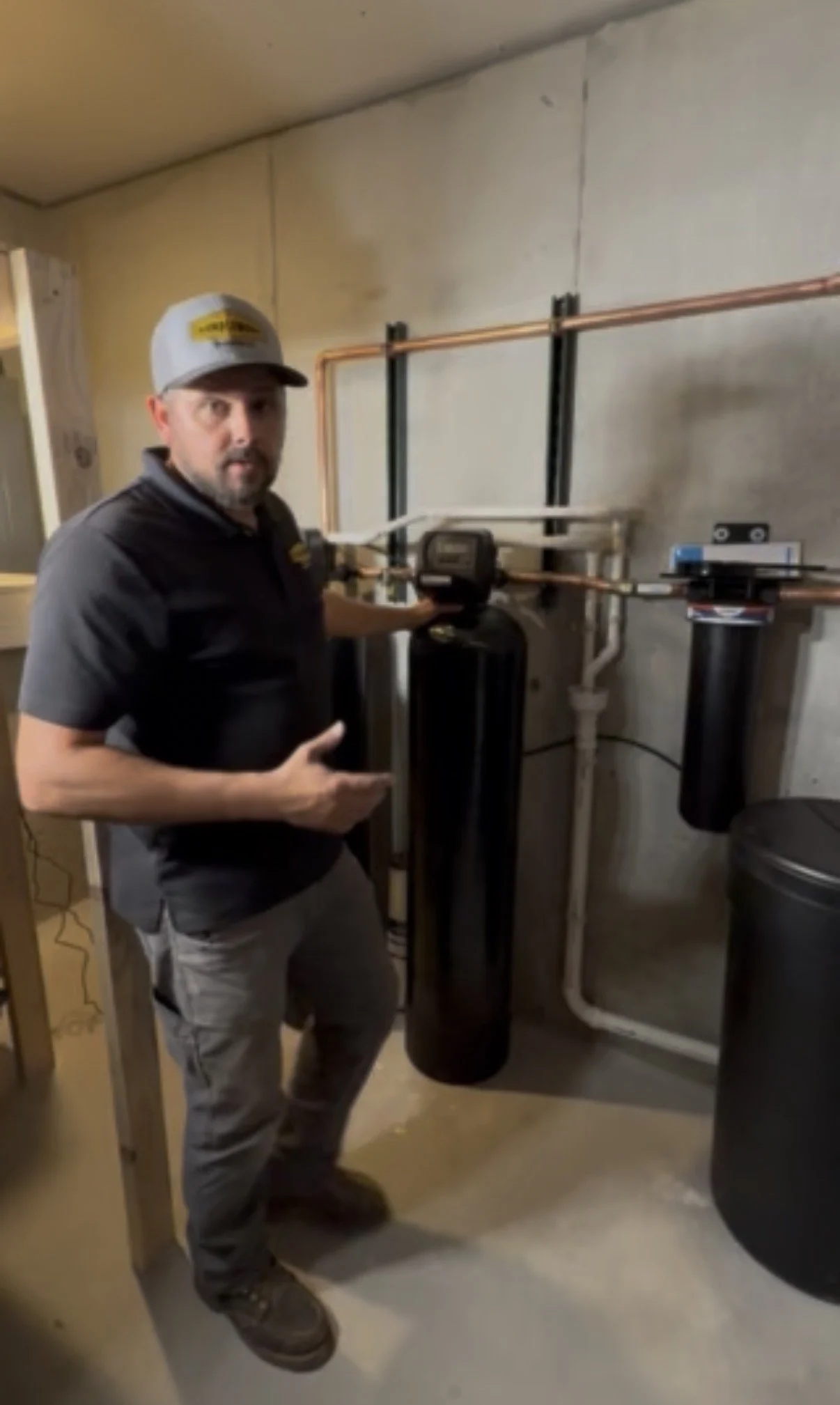
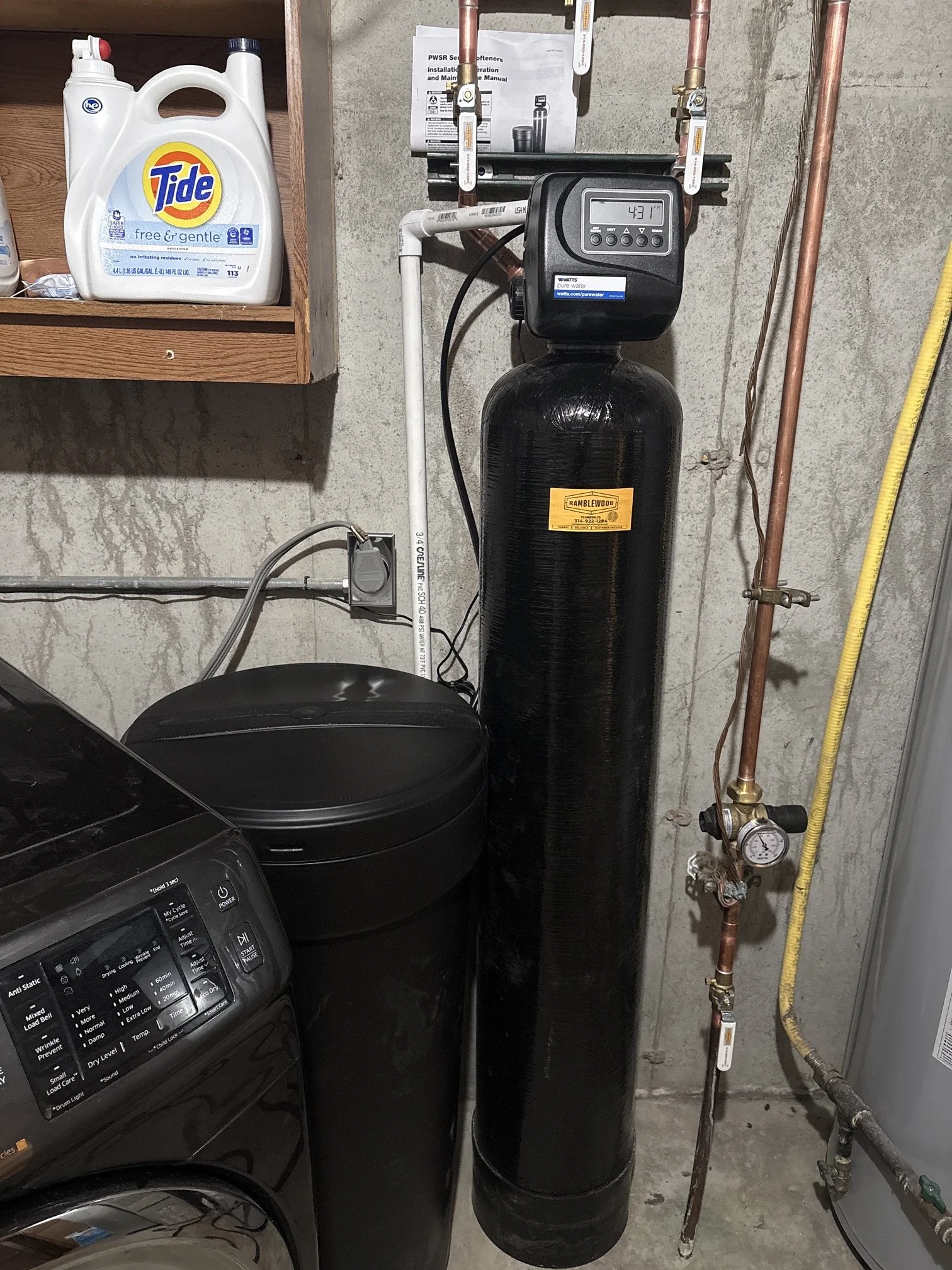
A professionally installed water softener removes hardness minerals before they circulate through your home’s plumbing system. At Ramblewood Plumbing Company, we install, replace, repair, and maintain whole-house water softeners that help protect your plumbing while improving water quality throughout your home.
Whether you’re replacing an aging system or installing one for the first time, our licensed Master Plumber will help you choose the right equiment based on your home’s water usage, plumbing system, and long-term goals.


What Is a Water Softener?
Many homes throughout Missouri receive water that contains naturally occurring calcium and magnesium. While these minerals are generally safe to consume, they can create what is commonly known as hard water.
As hard water travels through your plumbing system, mineral deposits slowly accumulate inside water heaters, pipes, showerheads, faucets, dishwashers, washing machines, and other appliances. Over time, this buildup can reduce efficiency, increase energy consumption, shorten equipment lifespan, and require more frequent repairs.
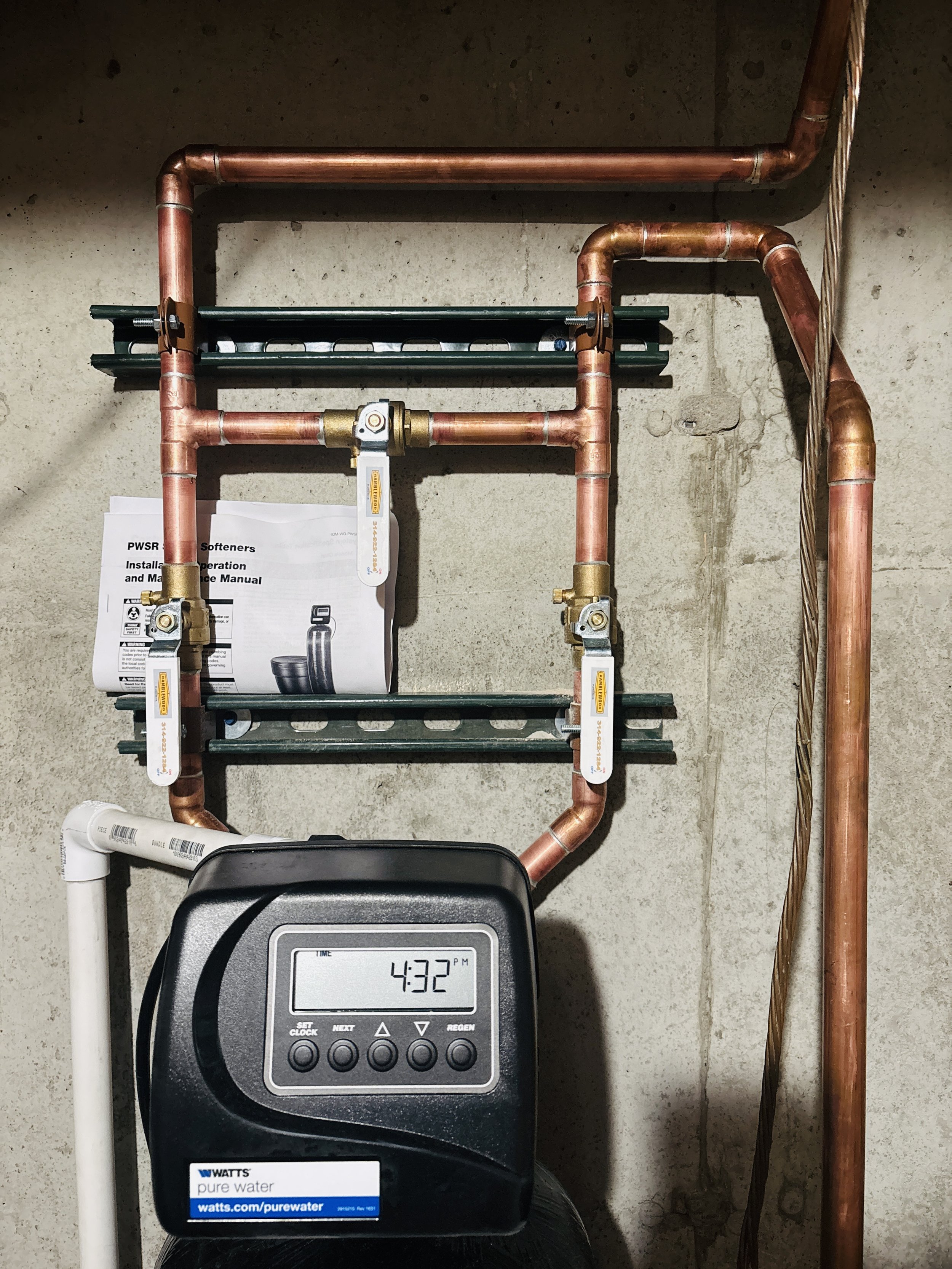
A water softener uses a process called ion exchange to remove hardness minerals before the water enters your home’s plumbing system. As water flows through the resin tank, calcium and magnesium ions are exchanged for sodium or potassium ions. The result is softer water that helps reduce scale buildup while improving soap performance throughout the home.
Soft water can:
Protect plumbing fixtures
Extend appliance life
Improve water heater efficiency
Reduce mineral buildup
Help soap lather better
Leave dishes cleaner
Make laundry feel softer
Reduce cleaning time around sinks, showers, and faucets
Choosing the right size system is important. An undersized softener may regenerate too often, while an oversized system may not operate efficiently. Our team helps homeowners select the proper equipment based on household size, water usage, and water hardness.
Signs You Need Water Softener Service:
✔ White spots on dishes
✔ Soap doesn’t lather well
✔ Dry skin after showering
✔ Itchy skin
✔ Stiff laundry
✔ Mineral buildup on faucets
✔ Scale around showerheads
✔ Water heater efficiency declining
✔ Frequent appliance repairs
✔ Hard water stains in sinks and showers
If you’ve noticed any of these warning signs, it’s a good idea to have your plumbing system professionally evaluated before mineral buildup causes more expensive plumbing problems.
Our Water Softener Solutions
Water Softener Installation
Installing a properly sized water softener helps protect your plumbing system from hard water damage while improving water quality throughout your home. We evaluate your home’s water usage, plumbing layout, and existing equipment before recommending a system that fits your family’s needs.
Water Softener Replacement
Most water softeners eventually reach the end of their service life. If your existing unit no longer softens water effectively, requires frequent repairs, or has become inefficient, we can recommend replacement options that provide improved performance and reliability.
Water Softener Repair
Many water softener problems can be repaired without replacing the entire system. We diagnose issues such as resin tank problems, control valve malfunctions, salt bridge formation, clogged injectors, and regeneration failures to restore proper operation whenever practical.
Routine Maintenance
Like any plumbing equipment, water softeners perform best with regular maintenance. We inspect system operation, verify regeneration settings, clean components as needed, and ensure the unit continues operating efficiently.
Water Quality Consultation
Every home is different. We discuss your water quality concerns, explain the differences between water softeners and filtration systems, and recommend solutions based on your goals rather than a one-size-fits-all approach.
Why Choose Ramblewood Plumbing Company
Licensed Master Plumber
Proper installation ensures reliable operation, efficient regeneration, and long-term performance.
Honest Recommendations
If your existing equipment can be repaired, we’ll explain that option before recommending replacement
Family-Owned & Operated
We believe in building long-term relationships with homeowners through honest service and dependable workmanship.
Respect for Your Home
We protect floors, wear shoe covers, clean up thoroughly, and leave your home as neat as we found it.
Quality Workmanship
Neat plumbing installations and attention to detail help ensure years of reliable operation.
Communication
You’ll understand your options, pricing, and recommendations before any work begins.
Interior Plumbing Specialists
Our experience with residential plumbing allows us to integrate water treatment equipment correctly into your home’s plumbing system.
Step 1 – Inspection
We inspect your water softener, plumbing connections, what your home needs, test water quality, and have an actual conversation with you about what you are wanting.
Step 2 – Diagnosis
We’ll explain the problem, discuss your options, answer your questions, and provide straightforward recommendations.
Step 3 – Repair or Installation
Our licensed plumber completes the repair or installs your new water softener using quality materials and proven installation methods.
Step 4 – Testing
We thoroughly test the system, verify proper operation, test water quality, and inspect for leaks.
Step 5 – Cleanup
We leave your home clean, explain how your new water softener operates, review maintenance recommendations, and answer any remaining questions.
Related Services
Reverse Osmosis Systems
Whole Home Plumbing Inspection
Plumbing Maintenance
Leak Detection
Customer Reviews
“Ramblewood Plumbing installed our new water softener and took the time to explain how everything worked. The installation was clean, professional, and our water quality improved immediately. We couldn’t be happier with the service.”
⭐⭐⭐⭐⭐- John D.
“Excellent experience from start to finish. The team recommended the right water softener for our home without any pressure. They arrived on time, protected our floors, cleaned up afterward, and the system has worked perfectly.”
⭐⭐⭐⭐⭐- Sarah M.
Homeowner Education
What Is Hard Water?
Hard water contains elevated levels of dissolved calcium and magnesium that naturally occur as groundwater moves through rock and soil. While these minerals aren’t typically harmful to drink, they can gradually accumulate inside plumbing systems, creating scale that reduces efficiency and shortens the life of water heaters, dishwashers, washing machines, coffee makers, and plumbing fixtures. Many homeowners don’t realize they have hard water until they notice stubborn white residue, soap scum, or declining appliance performance.
Water Softener vs. Water Filter
A water softener and a water filter solve different problems. Water softeners remove hardness minerals that cause scale buildup, while water filters reduce contaminants such as sediment, chlorine, taste, odor, or certain chemicals. Many homeowners choose to install both systems together for comprehensive water treatment. A softener protects plumbing and appliances, while a filtration system improves the taste and quality of the water you drink and use throughout the home.
How Long Does a Water Softener Last?
A quality residential water softener typically lasts 10–15 years, depending on water quality, maintenance, and usage. Regular maintenance, proper salt levels, and occasional inspections can help maximize the lifespan of the equipment. If your system is older and no longer providing soft water consistently, replacement may be the most cost-effective option.
Common Homeowner Mistakes
Many homeowners assume all salts are the same, neglect routine maintenance, or continue using an undersized system that struggles to meet household demand. Others mistake filtration systems for softeners or believe bottled water solves hard water problems. Understanding the purpose of each water treatment system helps you choose the right solution and avoid unnecessary costs.
How a Water Softener Protects Your Plumbing
Hard water minerals slowly accumulate inside pipes, valves, fixtures, and water heaters. Over time, this buildup restricts water flow, reduces heating efficiency, and can contribute to premature equipment wear. A properly functioning water softener helps minimize mineral scale, allowing plumbing systems and appliances to operate more efficiently and often last longer.
Frequently Asked Questions
How do I know if I have hard water?
White spots on dishes, mineral buildup on faucets, soap scum, stiff laundry, and dry skin are all common signs of hard water.
Will a water softener improve my water heater?
Yes. By reducing mineral scale, softened water can help improve water heater efficiency and reduce buildup inside the tank or heat exchanger.
How often do I add salt?
Most homeowners refill the brine tank every few weeks to a few months, depending on household water usage and system size.
Can softened water still be used for drinking?
Yes. Most homeowners safely drink softened water, though some choose to pair a water softener with a reverse osmosis system for drinking water
Do I need both a filter and a softener?
Many homes benefit from both. A softener addresses hardness minerals, while a filter improves taste, odor, sediment, and certain contaminants.
Read our complete Water Softener FAQ →
| Repair or Maintain Existing Water Softener | Replace Your Water Softener |
|---|---|
| Minor valve, timer, or control issue | System is 10–15+ years old |
| Salt bridge or clogged injector can be repaired | Frequent repairs or recurring problems |
| Resin bed is still functioning properly | Resin bed is worn out or damaged |
| Unit is correctly sized for your household | Your family's water usage has increased |
| Routine maintenance restores performance | System no longer produces consistently soft water |
| Lower upfront cost | Greater efficiency and long-term reliability |
| Existing equipment still has useful life remaining | New technology offers improved efficiency and easier maintenance |
Every home is different. The best choice depends on the age of your water softener, the severity of your hard water, your household’s water usage, and the condition of the existing equipment. Ramblewood Plumbing Company can evaluate your current system and help you decide whether a repair or replacement offers the best long-term value.
Ready for Enjoy Softer Water?
Whether you’re installing your first water softener, replacing an aging unit, or looking for maintenance and repairs, Ramblewood Plumbing Company is here to help. We proudly serve homeowners throughout St. Louis City, St. Louis County, Jefferson County, and St. Charles County with honest recommendations, expert workmanship, and dependable plumbing solutions.
Call today to schedule your water softener service with Ramblewood Plumbing Company.
Learn More
Continue learning with these helpful homeowner resources:
Water Softener FAQ
Water Filter FAQ
Water Quality FAQ
Plumbing Maintenance FAQ
Whole Home Plumbing Inspection
Homeowner Plumbing Guide
Blog: Understanding Hard Water in Missouri
Service Areas
Ramblewood Plumbing Company proudly provides water heater repair, replacement, installation, and maintenance throughout St. Louis City, St. Louis County, Jefferson County, and St. Charles County. We regularly serve homeowners in Kirkwood, Webster Groves, Ballwin, Chesterfield, Wildwood, Fenton, Arnold, Oakville, Affton, Crestwood, Eureka, High Ridge, House Springs, Festus, and many surrounding communities.