
Water Softener Frequently Asked Questions
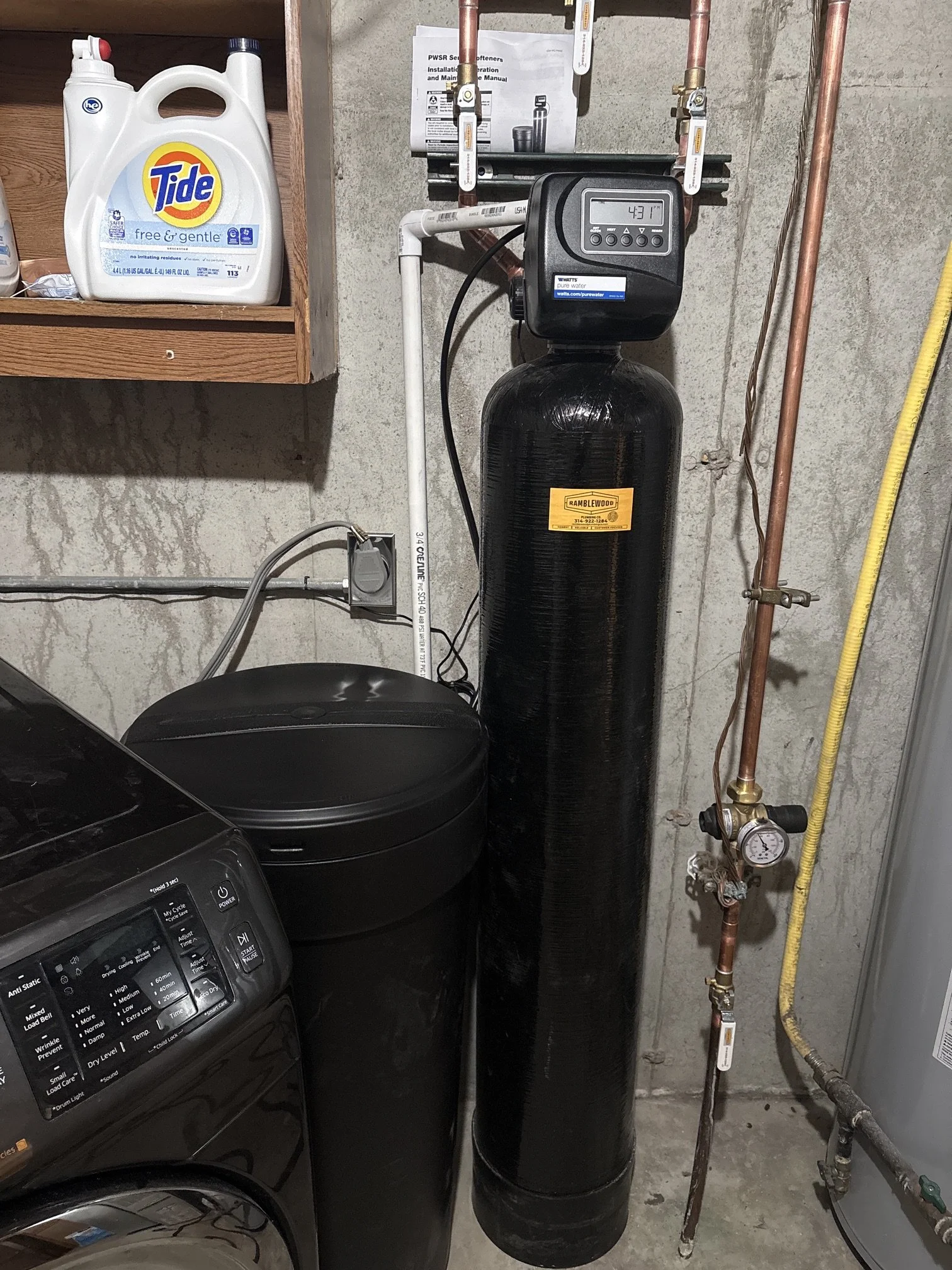
A water softener removes minerals like calcium and magnesium that cause hard water. Hard water doesn’t usually create a health risk, but it can shorten the life of plumbing fixtures, reduce water heater efficiency, clog fixtures, leave soap residue, and create stubborn scale buildup throughout your home. A properly sized and maintained water softener can help protect your plumbing system while improving everyday water quality.
Learn more about our Water Softener Installation and Repair Services.
| Feature | No Water Softener | Water Softener Installed |
|---|---|---|
| Mineral Buildup | Heavy | Significantly Reduced |
| Soap Lather | Poor | Excellent |
| Water Heater Efficiency | Reduced Over Time | Improved |
| Faucet Scale | Frequent | Minimal |
| Appliance Lifespan | Often Shorter | Often Longer |
| Laundry Feel | Stiff | Softer |
| Cleaning Effort | Higher | Lower |
Understanding Water Softeners
What is hard water?
Hard water contains elevated levels of dissolved minerals, primarily calcium and magnesium. These minerals naturally enter groundwater as it moves through rock and soil. While safe to drink, hard water creates scale buildup inside plumbing systems and appliances over time.
How does a water softener work?
Most residential water softeners use an ion exchange process. As water flows through the mineral tank, calcium and magnesium attach to resin beads while sodium or potassium ions replace them. The system periodically regenerates itself by flushing the collected minerals away with a salt brine solution.
Is hard water common in St. Louis?
Yes.
Many homes throughout St. Louis City, St. Louis County, St. Charles County, and Jefferson County have moderately hard to very hard water depending on the municipal water source or private well. Many homeowners notice scale buildup shortly after moving into the area.
Is hard water dangerous?
Generally, no.
Hard water is usually considered safe to drink. The concern isn’t your health—it’s what hard water does to your plumbing system, appliances, and fixtures over many years.
What problems does hard water cause?
Hard water commonly causes:
White chalky buildup on faucets
Mineral deposits inside showerheads
Soap scum
Spots on dishes
Dry skin
Dry hair
Water heater scale buildup
Reduced water heater efficiency
Shortened appliance lifespan
Stiff laundry
Higher energy bills
Common Water Softener Problems
How do I know if I need a water softener?
Signs include:
White mineral buildup on faucets
Spots on glassware
Soap that won’t lather
Dry itchy skin
Dingy laundry
Scale around plumbing fixtures
Frequent water heater problems
Appliances wearing out early
Low efficiency from water-using appliances
If you’re noticing several of these issues, your home’s water should be tested.
Why are my dishes covered in white spots?
Hard water minerals remain behind after the water evaporates. A water softener significantly reduces these mineral deposits and helps dishes come out cleaner.
Why does my skin feel dry after showering?
Hard water leaves minerals behind on your skin that can interfere with soap rinsing away completely. Many homeowners notice softer skin after installing a properly functioning water softener.
Why does my laundry feel stiff?
Minerals become trapped in fabric fibers, making clothing rougher over time. Softened water allows detergent to work more effectively and rinse away more completely.
Why is my water softener using a lot of salt?
Excessive salt use may indicate:
Incorrect programming
Improper sizing
Continuous regeneration
Internal valve problems
Resin issues
Water leaks
A plumbing inspection can determine the cause.
Why isn’t my water feeling soft anymore?
Possible causes include:
Empty salt tank
Salt bridge
Worn resin
Control valve failure
Incorrect settings
Bypass valve left open
System age
Many of these issues can be repaired without replacing the entire unit.
Why is there water in the brine tank?
Some water is completely normal. Excessive water, however, may indicate a clogged drain line, malfunctioning valve, injector issue, or programming problem.
Repair vs. Replacement
Can a water softener be repaired?
Yes.
Many common problems—including valve repairs, injector cleaning, programming adjustments, resin replacement, and minor leaks—can often be repaired without replacing the entire system.
How long does a water softener last?
Most quality residential water softeners last approximately 10–15 years, although lifespan depends on:
Water quality
Proper sizing
Maintenance
Frequency of regeneration
Household water usage
Manufacturer quality
Some systems operate much longer with proper care.
When should I replace my water softener?
Replacement may make sense if:
The system is over 15 years old.
Repairs are becoming frequent.
Resin has deteriorated.
Parts are no longer available.
Water quality remains poor after repairs.
The system was never properly sized.
Is repairing an older system worth it?
It depends on the age, repair cost, and overall condition. Ramblewood Plumbing evaluates the entire system before recommending replacement.
Can an undersized water softener cause problems?
Absolutely.
An undersized unit regenerates more frequently, uses additional salt, wears out sooner, and may never fully soften your water.
Proper sizing is one of the most important parts of a successful installation.
Installation Questions
How is a water softener sized?
Sizing depends on:
Number of people in the home
Daily water usage
Water hardness
Iron content
Plumbing layout
Future household needs
Choosing the right capacity improves efficiency and reduces maintenance.
How long does installation take?
Most residential water softener installations can be completed in several hours, although the exact time depends on existing plumbing, accessibility, and whether additional plumbing modifications are needed.
Where is a water softener installed?
Most systems are installed where the main water line enters the home before it branches to plumbing fixtures. Common locations include:
Basements
Utility rooms
Mechanical rooms
Garages
Crawl spaces (when appropriate)
Does a water softener require electricity?
Many modern systems do require electricity to operate the electronic control valve. Some non-electric systems are also available.
Can I install my own water softener?
While DIY installation is possible, professional installation helps ensure:
Proper sizing
Correct plumbing connections
Safe bypass installation
Proper drainage
Manufacturer warranty compliance
Reliable long-term performance
How much does a water softener cost?
Pricing depends on:
System size
Water hardness
Plumbing modifications
Brand
Installation complexity
Additional filtration equipment
After evaluating your home’s plumbing and water quality, Ramblewood Plumbing provides straightforward pricing before work begins.
Maintenance & Lifespan
How often should I add salt?
Salt usage varies by household size and water consumption, but many homeowners check the brine tank every month and refill it before the salt level becomes too low.
What type of salt should I use?
Most manufacturers recommend high-quality evaporated salt pellets. The ideal product depends on your specific equipment.
What is a salt bridge?
A salt bridge is a hardened crust that forms inside the brine tank, preventing salt from dissolving properly. The system may appear full of salt while actually producing hard water.
Does a water softener require maintenance?
Yes.
Routine maintenance may include:
Checking salt levels
Cleaning the brine tank
Inspecting valves
Cleaning injectors
Testing water hardness
Verifying regeneration settings
Regular maintenance helps maximize system lifespan.
Does softened water damage plumbing?
No.
In fact, softened water generally helps reduce mineral buildup inside plumbing systems and water heaters, allowing fixtures and appliances to operate more efficiently.
Water Softeners & Water Filters
Is a water softener the same as a water filter?
No.
A water softener removes hardness minerals.
A water filter removes contaminants, sediment, chlorine, taste, odor, or other substances depending on the filter type.
Many homes benefit from having both systems.
Do I need both a water softener and a water filter?
Sometimes.
If your primary concern is hard water, a softener may be enough. If you’re concerned about chlorine taste, odors, sediment, or drinking water quality, adding filtration may provide additional benefits.
St. Louis Water Quality Questions
Why is hard water such a problem in the St. Louis area?
Many homes throughout the St. Louis region receive water that contains naturally occurring calcium and magnesium. Over time these minerals accumulate inside water heaters, shower valves, faucets, dishwashers, washing machines, and plumbing pipes.
Older homes can be especially vulnerable because decades of mineral buildup may already exist inside the plumbing system.
Installing a properly sized water softener can help reduce future buildup while protecting expensive plumbing equipment.
Does hard water affect my water heater?
Yes.
Water heaters are one of the appliances most affected by hard water. Mineral deposits accumulate inside the tank or heat exchanger, reducing efficiency, increasing heating times, shortening equipment life, and potentially leading to premature repairs or replacement.
Questions About Ramblewood Plumbing
Does Ramblewood Plumbing install water softeners?
Yes. We install, replace, repair, and maintain residential water softeners and can recommend a properly sized system based on your home’s water quality and plumbing needs.
What areas do you serve?
We proudly serve homeowners throughout:
Will I receive pricing before work begins?
Yes. After inspecting your plumbing system and discussing your goals, we provide straightforward pricing before any work begins.
Related Resources
Continue learning with these helpful guides:
Whole-House Water Filter Service
Plumbing FAQ Library
Water Heater Maintenance Blog
Have More Questions About Water Softeners?
Whether you’re dealing with hard water, replacing an older water softener, or trying to determine which system is right for your home, Ramblewood Plumbing Company is here to help.
Our licensed plumbing professionals can evaluate your home’s water quality, explain your options, and recommend a solution that fits your plumbing system and your family’s needs.
We proudly serve homeowners throughout St. Louis City, St. Louis County, St. Charles County, and Jefferson County.
Schedule Water Softener Service Today or Call Ramblewood Plumbing Company to get started.