
Hose Bib Frequently Asked Questions



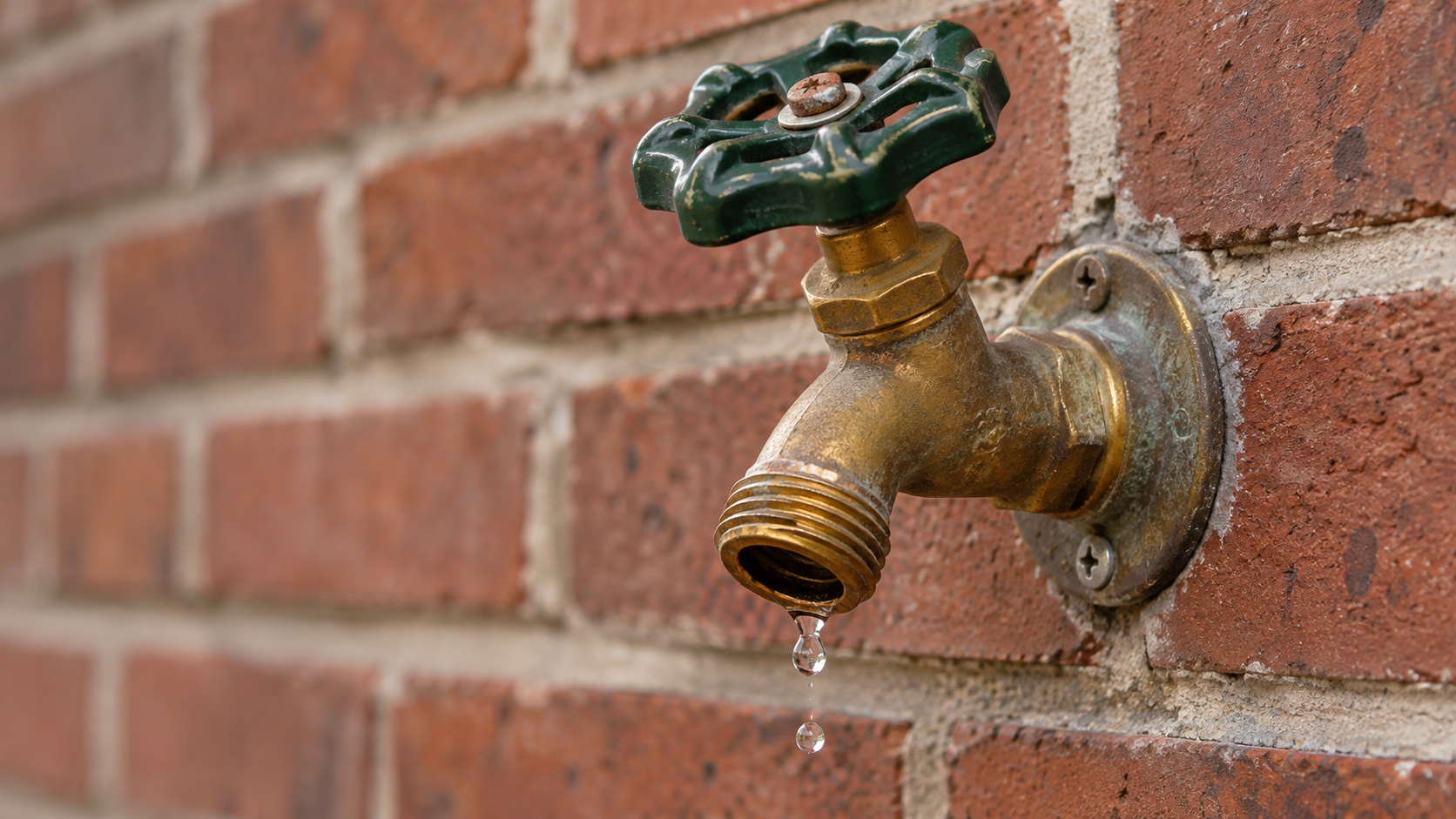
A hose bib is the outdoor faucet you connect to a garden hose. You might also call it a spigot, hose bibb, or outside faucet. It’s what you use to water the garden, rinse muddy boots, wash the car, or fill a bucket outside. When it starts dripping, loses flow, or wiggles every time you connect the hose, knowing where the problem starts can save you from replacing a fixture that only needs a small part.
In St. Louis, some outdoor faucet problems first show up after winter. A hose left connected during a freeze can prevent a frost-free faucet from draining. If the tube splits inside the wall, the first sign may be water in the basement when you turn the spigot on in spring. Other problems are simpler to spot. A spray right where the hose screws on may come from a worn hose washer, while a drip that continues from the bare spout after shutoff may point to a worn seal inside the faucet.
This guide explains how to tell those symptoms apart, what maintenance you can do yourself, and when it makes sense to repair or replace an outdoor faucet. You’ll also learn what a vacuum breaker does, how to prepare your spigot for winter, and what affects the cost of installing a frost-free model. A good first step for most outdoor leaks is to remove the hose and look for the exact spot where water appears.
Ramblewood Plumbing Company provides hose bib repair, replacement, and installation for homeowners in St. Louis City, St. Louis County, Jefferson County, and St. Charles County.
What is a hose bib, and how does it work?
A hose bib is an outdoor water valve with a threaded outlet for a garden hose. Turning the handle opens an internal seal so water can flow through the spout. Closing the handle presses the seal against the valve seat and stops the flow. On a conventional hose bib, that shutoff point is close to the outside handle. A frost-free model moves it farther inside the wall.
If you’re describing a leak to a plumber, note where the water appears and whether the faucet is on or off. A drip from the spout after you close the handle points to a different part than water coming from behind the handle while you’re watering.
How does a frost-free hose bib work?
A frost-free hose bib shuts off the water farther inside the house and lets the water left in the faucet tube drain outdoors. A long stem connects the outside handle to the valve inside. The valve end needs to sit in a protected space, and the tube needs to slope toward the exterior so it can drain.
Remove hoses, splitters, watering timers, and other attachments before freezing weather. Those fittings can hold water in the tube, where it can freeze and expand. If you’re unsure what type of faucet you have, look for a brand or model marking. You may also be able to see its tube from an unfinished basement or crawl space.
What is a vacuum breaker on an outdoor faucet?
A vacuum breaker helps prevent water in a garden hose from being siphoned back into your home’s drinking water piping. Think of a hose sitting in a bucket of soapy water. If supply pressure drops, the vacuum breaker admits air to interrupt the siphon. The device may be built in under a cap on the faucet or screwed onto the hose outlet.
If water keeps spraying from the cap while the faucet runs, the vacuum breaker may have debris inside or a damaged part. A compatible repair kit can restore the device on some models. Bring the faucet brand and model to the parts counter or share a close-up photo with your plumber.
How long does an outdoor hose bib last?
A well-installed hose bib can last many years, and its condition is a better guide to replacement than its age alone. Freeze exposure, corrosion, heavy use, and strain from hanging hoses and splitters can all shorten its service life. Small internal seals can wear out while the faucet body and supply pipe still have years of use left.
If the handle turns smoothly, the faucet shuts off fully, and the body stays firm against the wall, check it again during your regular seasonal maintenance. If the fixture feels loose, has visible cracking or deep corrosion, or keeps leaking after repairs, have the faucet and its connection checked.
Why does my outside faucet drip when it’s turned off?
A persistent drip from an outdoor faucet usually means a worn seal, a damaged valve seat, or debris is keeping the valve from closing completely. A frost-free faucet can release some water when you first shut it off as the tube drains. Watch for water that keeps dripping after that initial drainage.
Remove the hose so you can see exactly where the water starts. Close the handle gently and check the bare spout again after the remaining water drains. Cranking the handle tighter can damage the parts that help it seal. If the drip continues, a model-specific washer or stem repair may solve it if the faucet body and valve seat are still sound.
Why does my hose bib leak only when the water is on?
A hose bib that leaks only when it’s on can have a worn handle seal, a faulty vacuum breaker, or a bad washer in the hose coupling. Dry off the outside of the faucet and use the first place water appears to narrow down the cause.
Water around the handle can point to a worn seal around the stem.
Continuous spray from the top cap can point to the vacuum breaker.
Spray where the hose screws on often comes from a worn, missing, or flattened hose washer.
Water behind the mounting plate or indoors can come from the faucet tube or a concealed connection. Turn the faucet off and leave it off until it’s checked.
| Where you see water | Possible cause | What to do first |
|---|---|---|
| Spout keeps dripping after shutoff | Worn seal, debris, or a damaged valve seat | Remove the hose and check whether the bare spout keeps dripping after it drains. |
| Around the handle while running | Worn seal around the stem | Identify the faucet model so you can check for a compatible repair part. |
| Continuous spray from the top cap | Debris in the vacuum breaker or a damaged part | Have the vacuum breaker checked and keep the backflow protection in place. |
| Where the hose screws on | Missing or worn hose washer, or damaged threads | Check the washer inside the hose coupling and replace it if worn. |
| Behind the faucet or inside the house | Split faucet tube or a leaking pipe connection | Stop using the faucet. If water keeps flowing, close the water supply if safe to do so. |
Why does water appear inside when I turn on the outdoor faucet?
Water that appears indoors when you turn on the outdoor faucet can come from a split frost-free faucet tube or a leaking connection behind the wall. If the split is past the valve that shuts off the water, it may only leak while the faucet is running. That’s why the problem can stay hidden all winter and show up the first time you water the garden.
Turn the outdoor faucet off and keep it off until the cause is checked. If water continues flowing, close the dedicated shutoff or the home’s main shutoff if you can safely reach it. Tell the plumber where the water appeared and whether closing the faucet stopped it.
Why is the water flow weak at my outdoor faucet?
Weak flow at one outdoor faucet can come from a kinked hose, a clogged nozzle or splitter, a partly closed indoor shutoff, or a restriction in the faucet or its supply pipe. Start by removing the hose and everything attached to the outlet. If the bare spout flows well, reconnect the parts one at a time until the flow drops.
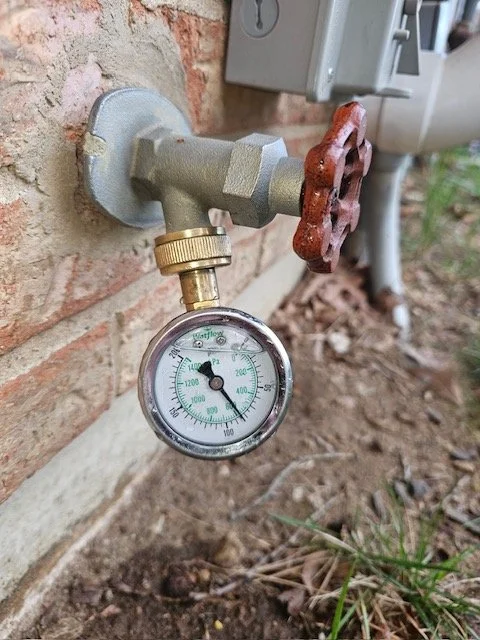
If the bare faucet still runs slowly, compare it with another outdoor faucet and an indoor fixture. Weak flow at several fixtures can point to a broader supply or water pressure issue. If only one spigot is affected, tell your plumber whether the change happened suddenly or developed over time. You can also read our water pressure and pressure reducing valve FAQ.
What maintenance should I do on my outdoor faucet?
Check your outdoor faucets in spring and fall for dripping, loose mounting, worn hose washers, and handles that are becoming hard to turn. In spring, look for moisture around the outdoor mounting plate and, if you can see it, the wall or pipe directly behind the faucet. In fall, disconnect hoses and attachments and locate any dedicated indoor shutoff.
Replacing a garden hose washer is an easy homeowner fix. If the fixture moves when you connect the hose, have someone check the mounting and the pipe connection before putting more strain on it. A hose reel or hanger can support the weight of a heavy hose and reduce the pull on the faucet.
How do I winterize an outdoor faucet in St. Louis?
Before the first freeze, disconnect hoses, watering timers, splitters, and other attachments so water can drain from the outdoor faucet. Drain the hose separately before storing it. The next step depends on the faucet type.
Conventional faucet with a dedicated indoor shutoff. Close the indoor shutoff and open the outdoor faucet to drain the line. If the indoor valve has a drain cap, follow the valve’s instructions to drain that section.
Frost-free faucet. Close the outside handle and leave the outlet clear so the tube can drain. Follow the manufacturer’s instructions for your model.
If the faucet serves an unheated garage or wall and you’re unsure how it’s supplied, have the setup checked before freezing weather. See our winter plumbing maintenance guide for St. Louis homes for more seasonal steps.
Can a leaking hose bib be repaired, or should it be replaced?
A leaking hose bib can often be repaired when a washer, stem seal, or replaceable vacuum breaker is worn and the faucet body is still sound. Replacement usually makes sense if the tube or body is cracked, the threads are badly damaged, corrosion has weakened the fixture, or the correct repair parts are unavailable.
Where the water appears helps guide the decision. A steady drip from the spout may only need a small internal part. Water inside the house during use calls for checking the faucet and its piping. If the same fixture keeps leaking after repairs, ask what’s causing the repeat failure before putting another part into it.
Can I replace a standard outdoor faucet with a frost-free model?
A conventional outdoor faucet can often be upgraded to a frost-free model if the longer tube fits and the shutoff end can reach a protected part of the house. The right length depends on the wall thickness and where the supply line can connect. The installation also needs secure mounting, outward drainage, and suitable backflow protection.
An exposed connection in an unfinished basement can make the upgrade straightforward. A finished ceiling, masonry wall, or tight crawl space can complicate access. If you’re considering doing it yourself, first confirm how the existing faucet connects indoors. Turning an old spigot from the outside can twist the pipe behind it, especially if the connection is concealed.
How long does it take to replace an outdoor faucet?
An outdoor faucet replacement can often be completed in one visit when the indoor connection is accessible and the supply pipe is in good shape. The job may take longer if the connection is concealed, freeze damage reaches the supply line, or a dedicated shutoff valve also needs replacement.
When you schedule the appointment, describe what’s directly behind the spigot, such as an unfinished basement, crawl space, finished room, or cabinet. A photo of the faucet and a photo of the pipe inside, if visible, can help explain the setup. The plumber can confirm the scope once they see how the faucet is attached and where the supply can be shut off.
What affects the cost of replacing a hose bib?
Hose bib replacement cost depends on the type of faucet, access to the indoor connection, and any work needed on the supply pipe or shutoff valve. Replacing a spigot on an exposed, sound line is usually a smaller job than moving the faucet, adding a new one, or repairing pipe damaged by freezing.
Ask what the estimate covers, including the new fixture, fittings, testing, and any new interior shutoff. If a finished wall or ceiling must be opened to reach the connection, ask how access will be handled. Those details make it easier to compare estimates and understand whether the work addresses both the faucet and the cause of the leak.
When should I call a plumber about my outdoor faucet?
Call a plumber if your outdoor faucet won’t shut off, moves at the wall, sends water indoors when you use it, or still leaks after you’ve ruled out the hose and its washer. It’s also worth scheduling service if water flow dropped suddenly and removing the hose, timer, or splitter made no difference.
If water is actively leaking indoors, turn off the faucet and isolate the supply at the dedicated or main shutoff if needed and safe to reach. When you call, explain where the water appeared, whether the faucet was on or off, and whether the trouble started after a freeze. Those details help narrow down what to check first.
Related Plumbing Resources
Need Help With Your Outdoor Faucet?
Whether you have a hose bib that won’t stop dripping, a spigot that froze over the winter, or a spot that could use a new outdoor faucet, Ramblewood Plumbing Company can help. We serve homeowners in St. Louis City, St. Louis County, Jefferson County, and St. Charles County.
Call (314) 922-1284 or contact Ramblewood Plumbing Company to schedule service or request an estimate.